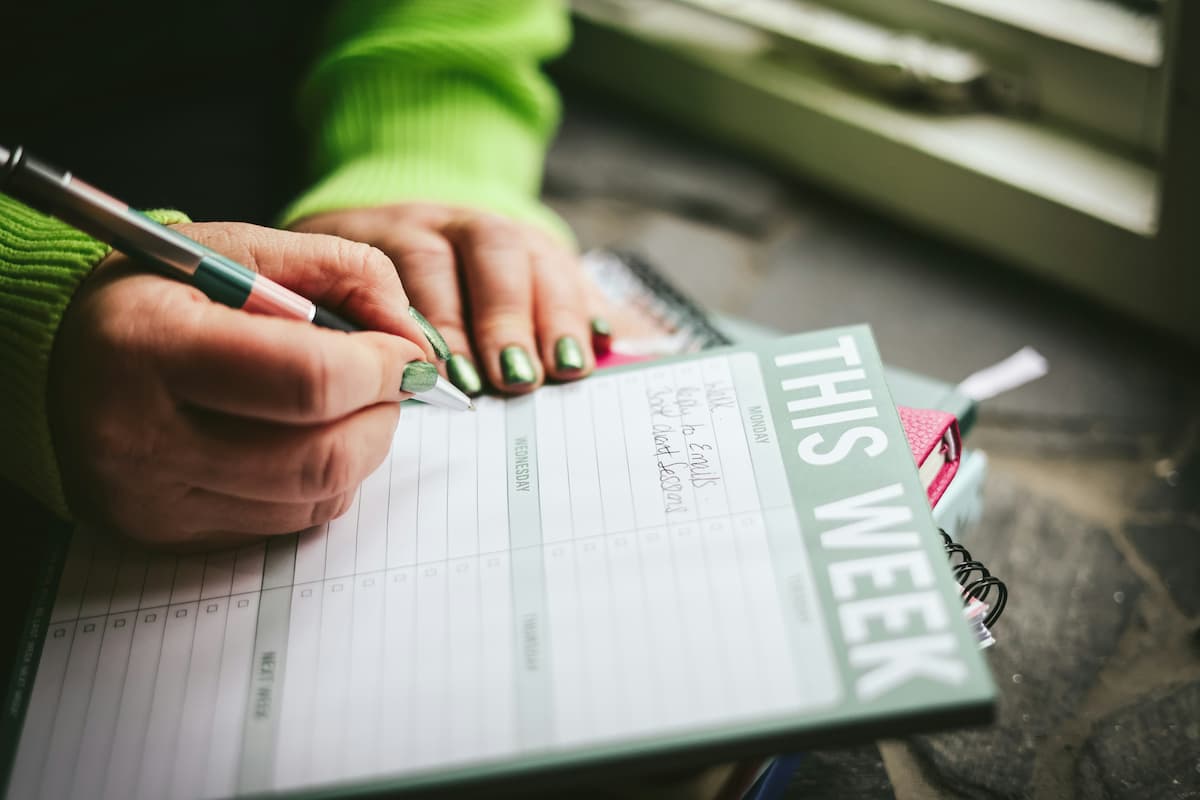
Most weeks used to start the same way; reactive, slightly behind, and already trying to catch up by 9am Monday.
Not because I wasn't organised. I had a calendar. I had a to-do list. But there was always a gap between what I'd planned in my head and what was actually happening on paper. And that gap had a habit of swallowing entire days.
The fix wasn't a better productivity system. It was a single habit, done consistently, once a week.
Why Sunday works
There's something about Sunday that makes it the right moment for this. The week just gone has settled. The week ahead hasn't started. You're in a natural pause between two things, which makes it easier to think clearly rather than reactively.
It doesn't need to be Sunday specifically, some people do this on Friday afternoon to close out the week. But Sunday works for me because it means Monday already has shape before it arrives. I'm not planning the week while already inside it.
Thirty minutes is enough. You don't need a three-hour life review. You need enough time to look back briefly, look ahead clearly, and write down the few things that actually matter.
The three questions I always start with
Before I open a planner or look at a calendar, I ask myself three questions. They take about five minutes and they change the quality of everything that follows.
What carried over from last week that still needs doing? There's always something. An email that didn't get sent, a task that got pushed, something I said I'd do and didn't. Getting these out of my head and onto paper means they stop quietly draining mental energy all week.
What are the three most important things I need to accomplish this week? Not a list of twenty. Three. The things that, if everything else fell apart, I'd still need to have done by Friday. Having this decided in advance means I always know what to protect when the week gets busy, and it always gets busy.
What do I need to be aware of this week? This is the logistics question. Cataleya's after-school club on Tuesday, Enzo's reading record needs signing, the dentist appointment on Thursday. The things that aren't tasks but still take up time and mental space if they catch you by surprise.
What the 30 minutes actually looks like
Once I've answered those three questions, the rest follows a loose sequence:
Review the calendar (5 minutes). Look at every commitment already in the diary. Anything that needs prep? Anything that conflicts? Anything I've forgotten about? I'm not changing anything,just making sure I know what's there.
Capture and organise tasks (10 minutes). Everything rattling around in my head goes onto paper. Then I sort it; what's genuinely this week, what can wait, what can be deleted entirely. Most to-do lists are too long because they're full of things that were never actually urgent.
Plan the key days (10 minutes). I don't schedule every hour,that's a recipe for a plan that falls apart by Tuesday. Instead I assign my three important tasks to specific days. Monday for this, Wednesday for that. A rough container, not a rigid schedule.
Set one family intention (5 minutes). This sounds soft but it matters. One thing I want to be intentional about with the kids this week; whether that's getting outside on Saturday, having a proper conversation with Cataleya about something she mentioned, or just being less distracted at dinner. It doesn't always happen. But having it written down means it's more likely to.
What I use to do it
Nothing complicated. A notebook and a pen, or a single notes page on my phone. The format matters less than the habit.
I've tried elaborate planners with colour coding and time-blocking and weekly review templates. They worked for a while, then became a chore. The simpler the format, the more consistently I actually do it.
The one thing I'd recommend is having a dedicated place for it, physical or digital rather than scattering notes across different apps and bits of paper. The value of a weekly plan is being able to refer back to it during the week, which only works if you can find it.
What changes when you do this consistently
The immediate effect is obvious, Monday feels less like being thrown in at the deep end. But the longer-term effect is less obvious and more valuable.
When you plan your week consistently, you start to get better at estimating your own capacity. You stop committing to things that don't fit. You notice the gap between what you planned and what actually happened, which tells you something useful about where your time really goes.
It also makes it easier to say no. When you're clear on what your three important things are this week, an additional request or a new task has to compete with something real rather than a vague sense of being busy.
Thirty minutes on a Sunday. It's a small investment for a week that already has its shape before it starts.
Comments (0)
No comments yet. Be the first to share your thoughts!
Leave a comment