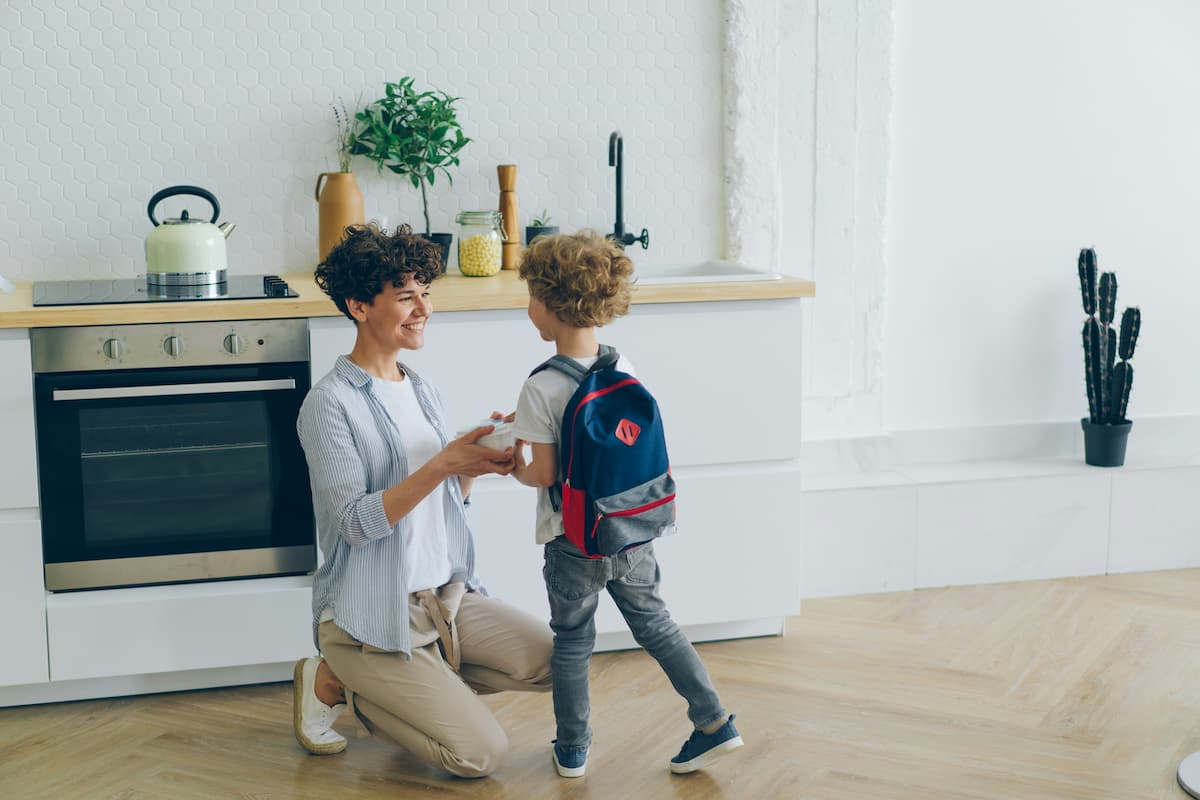
There was a period in our house when every single morning felt like a small emergency.
Not a dramatic one. Just the low-grade chaos that comes from two kids who can't find their shoes, a packed lunch that wasn't made the night before, and everyone running ten minutes late before the day had even started. Nothing catastrophic - just relentless.
The strange thing was, we weren't disorganised people. We had a calendar. We had routines for other parts of the day. But mornings kept slipping through.
It took me a while to figure out why. The problem wasn't that our mornings were too chaotic. It was that we were trying to manage everything in real time; and real time, with a six-year-old and a nine-year-old, is brutal.
Why most morning routines fail
Most morning routine advice is built around one person waking up early, having a slow coffee, and easing into the day. That's not a morning with children in it.
With kids, the window is compressed. Someone needs breakfast, someone can't find their reading book, and the thirty minutes you thought you had suddenly becomes fifteen. Any system that requires perfect conditions to work will fall apart the moment a child decides they don't like what's in their lunchbox.
What we needed wasn't a better schedule. We needed to move as many decisions and tasks as possible out of the morning entirely.
The shift that actually worked: the night before
The single biggest change we made had nothing to do with the morning at all.
We started treating the evening as morning prep time. Not in a rigid way, it takes about ten minutes but consistently.
Every school night, before Cataleya and Enzo go to bed, the same things happen:
- Bags are packed and by the door
- Clothes are laid out (they choose their own)
- Anything that needs to be signed or remembered is on the kitchen counter
- Lunchboxes are made or at least planned
That's it. It sounds almost too simple. But when you remove those four things from the morning, you remove at least half the friction. The shoes are already at the door. The argument about what to wear happened the night before, when nobody was rushing.
A visible routine, not a verbal one
The second thing we changed was how we communicated the routine.
I used to remind the kids what to do every morning. Get dressed, eat breakfast, brush teeth, get your bag. Every day, out loud, like a script. And every day, at least one step got skipped or forgotten.
The problem with verbal reminders is that they require the adult to be present, paying attention, and not doing seven other things at the same time.
We made a simple visual routine chart; printed, laminated, stuck to the kitchen cupboard at Enzo's eye level. Four steps, with pictures for the ones he couldn't read yet. Cataleya thought it was babyish at first, then quietly started using it.
What changed wasn't the kids' ability to follow a routine. It was that the routine stopped living in my head and started living somewhere they could both see it.
The unspoken rule: no screens in the morning
This one was less of a system and more of a household rule, but it's worth mentioning because it changed the energy of our mornings significantly.
Screens; tablets, TV - are off limits in the morning on during school days. Not as a punishment. Just to avoid distraction.
It removes the negotiation entirely. There's no "five more minutes." There's just: shoes on, bag by the door, then yes.
The first week, Enzo pushed back every day. By week two, he'd stopped asking. He knew the sequence. It wasn't a battle anymore, t was just how mornings worked.
What our morning actually looks like now
I want to be honest: it's not calm in the way a slow Sunday morning is calm. There's still noise. There's still the occasional meltdown over a scratchy sock or a lost hair bobble.
But it's calm in the sense that matters, no one is frantically searching for things, no one is shouting about being late, and I'm not starting my day already depleted.
Here's roughly how it runs:
The night before:
- Bags packed and by the door
- Clothes chosen and laid out
- Lunches made or contents agreed
- Anything school-related on the kitchen counter
Morning:
- Kids wake up, come downstairs
- Breakfast while I make drinks
- Visual chart handles the rest (dressed, teeth, shoes, bag)
- Read a book if everything is done and we still have time
- Out the door
The whole thing takes less than an hour. Not because we've optimised every minute, but because there's almost nothing to decide.
The part nobody tells you
The hardest part of building a morning system isn't figuring out what to do. It's accepting that consistency matters more than perfection.
There will be mornings where it falls apart; illness, a bad night's sleep, something Cataleya is anxious about that she hasn't told us yet. The system doesn't prevent those mornings. It just means they're the exception, not the default.
The goal was never a perfect morning. It was a reliable one.
And most days, that's exactly what we have.
📋 Free & Paid Family Planners
Download our free morning routine checklist or grab the full Family Organisation Pack — 5 printable templates to bring calm and structure to your week.
Comments (0)
No comments yet. Be the first to share your thoughts!
Leave a comment