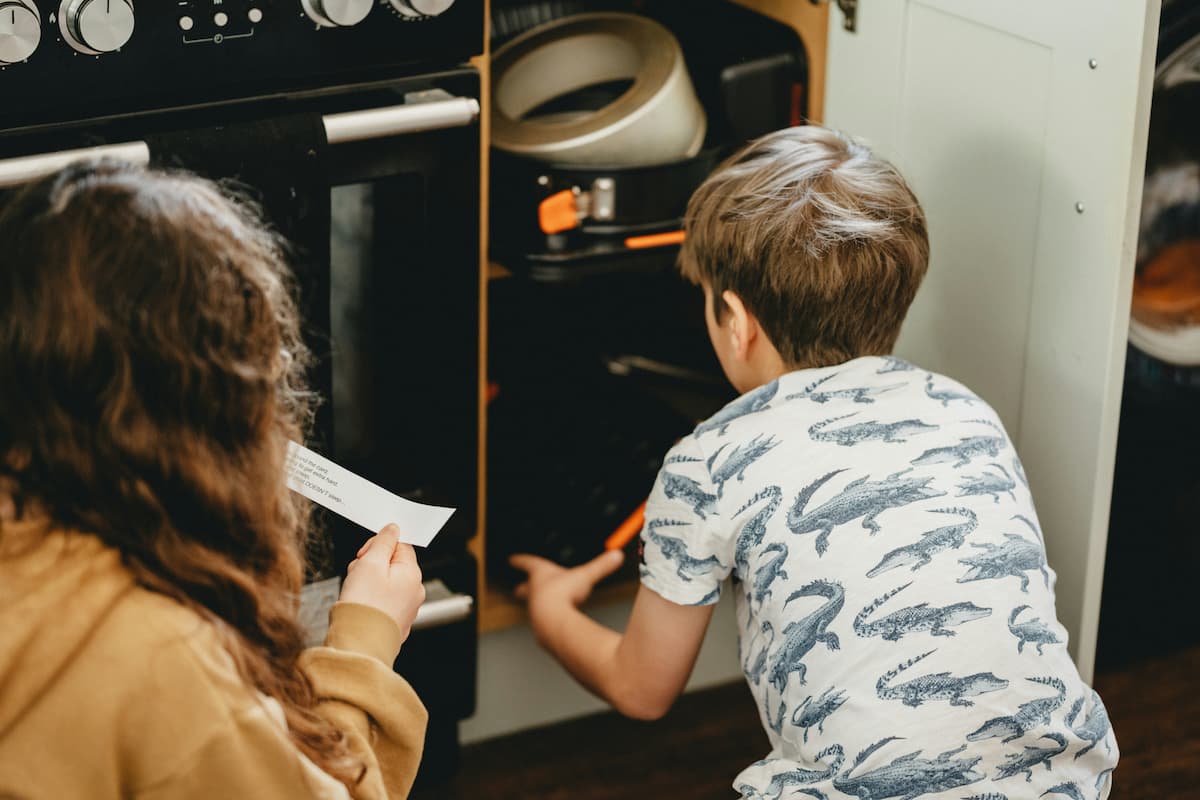
There's a moment every parent knows.
You ask your kid to unload the dishwasher and ten minutes later you find them standing in the kitchen holding one fork, completely overwhelmed by the sheer number of decisions involved in putting cutlery away.
That was Enzo last month. Six years old, full of energy, completely willing and absolutely paralyzed by the fork drawer.
I didn't laugh. Okay, I laughed a little. But it also made me realize I'd handed him a task without thinking about whether it matched where he actually was. Not where I thought he should be. Where he was.
That gap between what we think our kids can handle and what they can actually do is where most chore frustration lives. So here's what I've learned, slowly and imperfectly, about matching the task to the kid.
Why "Just Help Out" Isn't Enough
I used to give vague instructions. "Help clean up." "Tidy your room." "Can you just handle it?"
The result was always the same: a kid standing in the middle of a mess looking at me like I'd asked them to file their taxes.
Kids, especially younger ones need concrete, specific tasks. Not because they're incapable, but because their brains are still building the skill to break down abstract requests into actionable steps. That's not a character flaw. It's neuroscience.
Once I started being more specific, things got noticeably smoother. Still not perfect. But smoother.
What Kids Around 5–6 Can Actually Do
Enzo is six and here's what works for him — not in theory, but in practice, on a regular weekday:
- Putting his plate in the sink after every meal (not loading the dishwasher — that's too many decisions)
- Wiping the table with a damp cloth after dinner
- Making his bed; loosely, imperfectly, and that's fine
- Sorting laundry into darks and lights (he calls it "the colour game" and it still works)
- Putting shoes away at the door
- Feeding the dog with a scoop we pre-measure together
The common thread: one clear action, a defined start and end, and no chain of micro-decisions required. If I say "clean your room," he freezes. If I say "put all the Lego in the box," he's done in four minutes.
Also, he needs to see the task modelled first. Not once. Multiple times. And then do it alongside me before doing it solo. Shortcutting that step is the fastest route to frustration for both of us.
What Kids Around 8–10 Can Actually Do
Cataleya is nine, and she's at a stage where the range of what's possible has expanded significantly but so has her capacity to push back on things she finds boring or pointless.
Which is fair, honestly. She's not wrong that vacuuming is boring.
What works for her:
What works for her:
- Loading and unloading the dishwasher (once she understood the system, this became genuinely reliable)
- Folding and putting away her own laundry
- Helping plan and prep simple meals, she can make scrambled eggs independently and loves it
- Wiping down bathroom surfaces
- Helping with grocery lists when we're running low on something she notices.
The shift at this age is that she can handle multi-step tasks and remember recurring responsibilities without being reminded every single time. Not every time I won't oversell it but often enough that it feels like a system rather than a battle.
What helps her most is ownership. If I say "the dishwasher is your job, figure out your own system," she's more invested than if I micromanage every step. She also responds well to knowing why something matters. "This helps us not spend Sunday doing everything at once" lands better than "because I said so."
The Stuff That Trips Parents Up (Including Me)
Doing it for them because it's faster. Yes, I will unload that dishwasher in three minutes flat. If Enzo does it, it takes twelve and two things end up in the wrong drawer. But that's the point. The goal isn't a tidy kitchen, it's a kid who eventually knows where things live.
Not having consistent expectations. When chores happen randomly ("can you just help today?") rather than on a reliable schedule, kids don't build the habit. It stays effortful for everyone. Even a loose routine after dinner, before screen time creates enough structure to reduce friction.
Expecting gratitude or enthusiasm. I made peace with this a while ago. Neither of my kids are thrilled about chores. That's normal. The bar isn't joyful participation; it's adequate, reliable effort. Which, honestly, describes most adults at work too.
Reacting too hard to mistakes. Enzo once "helped" with laundry and mixed a red shirt into the whites. Things turned pink. We talked about it, I didn't make it dramatic, and he's been better at sorting since. Overreacting to mistakes is the fastest way to make kids stop trying.
A Simple Framework to Figure Out What's Right for Your Kid
Instead of googling "what chores for 7-year-olds," I've found it more useful to ask:
1. Can they do this safely? (No sharp things, no heavy lifting, nothing that could cause harm)
2. Have they seen it done? (Modelled, not just described)
3. Is the task concrete enough that there's a clear end state? ("Clean room" = no. "Put dirty clothes in hamper" = yes)
4. Have we practised it together first?
If you can check all four, try it. If it doesn't go well, that's information either the task isn't a match yet, or the setup needs adjusting.
It Gets Easier. Really
Cataleya now genuinely helps in ways that save me real time and mental load. That didn't happen overnight, and there were plenty of moments where I wondered if I was doing it wrong.
But consistency even messy, imperfect consistency compounds. The fork drawer still confuses Enzo. We're working on it. We'll get there.
Comments (0)
No comments yet. Be the first to share your thoughts!
Leave a comment